Slider

Business

Marketing

media

advertising

How Many Bodyguards Does It Take to Protect Mark Zuckerberg's 5-Bedroom Mansion?


How Many Bodyguards Does It Take to Protect Mark Zuckerberg's 5-Bedroom Mansion?Join us in a city near you at Entrepreneur’s Accelerate Your Business event series kicking off Feb 23. View cities and dates »

Paparazzi and passersby beware: There’s no casually cruising by Mark Zuckerberg’s $7 million abode anymore. The billionaire’s Palo Alto, Calif., mansion is now patrolled by 16 security guards, because apparently that’s how the world-famous Facebook co-founder and CEO rolls in his perpetual quest for privacy.

Yes, you read that number right. Sixteen bodyguards -- a small army -- are now working detail around the clock at Zuckerberg's cushy five-bedroom digs, according to a recent Page Six report. Incidentally, that’s the same number of pawns chess players use at the outset of a game, and what the new father and his wife, Priscilla Chan, are presumably hoping amount to enough muscle to fend off “threats from unstable” Facebook users.

Related: Mark Zuckerberg Uses Daughter's Birth to Announce New Charity
https://youtu.be/jwDq32MtOQU 
Safety first, kids. With more than 1 billion “daily active users on average” trolling the wildly popular social-media network, you’re bound to have more than a few creeper apples in the bunch. “You’re touching hundreds of millions of people,” an unnamed “insider” Silicon Valley source told Page Six. “All the CEOs get threats, and they take them very seriously.”

Some more than others.

Related: Did Mark Zuckerberg Really Take 'Paternity Leave?'

By hiring more than a baker’s dozen bodyguards to watch over his Palo Alto pad, Zuck’s bound to ruffle more than a few neighbors’ feathers. He did just that in 2013, when he spent $30 million to buy up four neighboring homes. Meanwhile, people living next door to his $10 million San Francisco digs on splashy Liberty Hill are furious about his security staff there. They claim Zuck’s watchdogs are “permanently” and “illegally” hogging nearby parking spots with their flashy silver SUVs.

Zuckerberg’s press handlers refute the allegations, telling Buzzfeed News: “The security team’s cars are parked in accordance with local parking laws. The team strives to be sensitive to neighbors’ concerns and regrets any inconvenience.”

“Sensitive” security or not, as one neighbor pointed out, it “can be cumbersome living next to Zuck.” Unfortunately for his Palo Alto neighbors, it might’ve just gotten worse.

How I Went From $40,000 in Debt to a Millionaire by Age 30


How I Went From $40,000 in Debt to a Millionaire by Age 30I came from a family where money was always an issue. My father was a union electrician who brought in a nice, but not exceptional, living. My mom was a stay at-home mom turned jobbie-entrepreneur (as I talked about here). But, money was always tight.

When my parents separated in my early teen years (and ultimately divorced), that put further pressure on their financials and assured that they wouldn’t be able to pay for my college education.

When I graduated from arguably the best undergraduate business school in the country, The Wharton School of Business at the University of Pennsylvania in 1995, I had an Ivy League education and $40,000 of college debt. I was determined that in less than eight years, I would go from being in that financial hole to having a net worth of one million dollars.

Related: How to Become a Millionaire in Under 5 Years

And I did it. Here’s how.


1. Set the goal.
Probably the most important but overlooked part of attaining a goal is having one to begin with. A goal means a very specific, desired outcome, with a specific date of completion and a plan of steps to help complete it.

My specific goal was to make my first million by age 30. I chose that because of the stress that not having a lot of savings put on my family, and I didn’t want to have to deal with a constant state of financial chaos. I figured having a cool million in the bank would allow me to be able to take more risks, have more flexibility and lessen my stress.

Age 30 seemed like a good challenging goal but still reasonable. While the tech world makes some folks billionaires at a young age now, back in 1995, I didn’t have a beeper, let alone a cell phone or a smart phone. I didn’t own my own computer (I went to the school’s lab) and the only thing resembling the internet was one email list-serve that I was on until I was introduced to Netscape (look it up if you are too young to remember it) after I started my first job. So, a million dollars was a good stretch.

Having the goal was something to continue to work towards and provided a benchmark of sorts to evaluate different activities to see if they would further me reaching that goal.

2. Take a high-pay, big opportunity job.
My next step was to find a job that would pay me the most amount of money (legally), while giving me a strong skill set that I could leverage down the road. I choose to go into the corporate finance side of investment banking, which paid me somewhere in the neighborhood of $85,000 my first year and well into the mid-to-high six-figures in subsequent years.

Not only did I pick the right job, I picked the right company to work for. While I could have gone the prestige route and taken a job at a company like Goldman Sachs, I picked a more boutique firm that had a meritocracy environment. I thought that there was a better shot at getting promoted and earning more in the out years in that type of company -- which proved to be true.

3. Work your butt off.
I worked like crazy. I would say that most weeks, I worked 16 to 18 hours a day, six to seven days a week. I pulled many all-nighters. I got on as many deal teams and live transactions as possible and learned as much as I could.

4. Advocate on your own behalf.
I didn’t let my hard work go unnoticed. I would remind our senior team and department members of all that I was doing and what my expectations were. When I thought that I was working at a higher level, I asked early and often for promotions. I was called a self-promoter, but I was also rapidly promoted. That increased my earnings substantially, especially having become a vice president by age 25 -- a good six years ahead of schedule.

Related: The Only 5 Ways You Can Become Rich

5. Keep overhead to a bare minimum.
My dad had a saying, “keep your nut low," which meant to keep overhead expenses to as little as possible. While my colleagues got two- and three-bedroom apartments, I stayed in a studio apartment (I was barely ever there, since I was usually at work). My nightstand was a cardboard box with a sheet over it. I didn’t have cable television. I took the bus to work. I tried to eat at work whenever it was possible. When I went out, I calculated menu costs carefully and ordered accordingly.

This allowed me to save the greater majority of each paycheck and pursue the next step.

6. Relentlessly pay down debt.
Back in the day, interest rates were substantially higher than they are now. While I don’t remember the exact rates that I paid, they were probably in the 6- to 9-percent range. That’s a lot of return to make up, so I took each paycheck to pay down my college loans after taking care of overhead.

I cleared those out by December of 1996, about a year and a half after graduating college.

7. Make investments and take a back end.
With my debt cleared, my earnings increasing and my overhead very low, I was able to start saving. And, a portion of that savings I started investing in retirement accounts, stocks and bonds (and related mutual funds).

As my career progressed, and my net worth started to substantially climb, then I was able to make additional investments. This included leaving my investment banking job after five years to start my own firm and taking equity stakes in companies. Had I stayed in my job, I probably would have hit the million-mark a year or two sooner, but I wanted to try to be more entrepreneurial -- and I felt I could still hit the goal.

One of my equity stakes had a nice payday that helped to compensate for the loss in guaranteed salary and bonus from going a more entrepreneurial route.

8. Keep setbacks in stride.
Not everything worked perfectly along the route. One of my biggest setbacks was loaning nearly $40,000 to someone close to our family in 1997, just as I was starting to ramp my savings. He took off without repaying most of it. But, I decided to not focus on the loss and focus on the future and what I could control.

And that was it. By age 30, my self-made net worth reached and surpassed the million-dollar mark.

What that bought me was the flexibility I so desired. It allowed me and my husband -- who was pursuing his own financial success story -- to map a plan for our future. It allowed me to take more professional risks. It allowed me to not have to worry about financial issues that plagued my parents when they were alive.

Monetary benchmarks weren’t -- and still aren’t -- my only goals, but this type of formulaic approach should work well for you, no matter what types of goals you are pursuing.

7 Massively Overhyped Careers to Avoid


7 Massively Overhyped Careers to AvoidEver since social media and smartphones captured the imagination of a billion people, we’ve seen a rash of new career fields that never existed before. Many of you, no doubt, have jumped on these opportunities with fad-like fervor. And therein lies the rub. You’re far from alone.

These fields are now flooded. The problem, as many have already learned, is that if it’s easy – if the barriers and costs to entry are low – then anyone can do it. And that’s exactly what’s happening. Not just anyone, but anyone and everyone. And that means heavy competition, no pricing power, slim profit margins and low income.

If all it takes is some online classes, a certificate, a seminar, a self-help book and a website to proclaim that you’re the best darn, award-winning, best-selling, guru, expert, or whatever, you can bet that a flood of other people with no real marketable skill or expertise will go for it. And they have.

And when it comes to fads, you can always count on one thing: they will come, and they will go. Granted, fads may gain viral traction in the blink of an eye, but once people discover that there’s nothing to them – that they really are all hype – they vanish just as quickly as they appeared.

Related: 10 Behaviors of Genuinely Successful People


Don’t get me wrong. There are legitimate experts in every field, even some of these, but if you’re not a top performer, you might want to reconsider your future in these faddish gigs.

1. Professional coaching
There are coaches for everything: leadership, strengths, performance, career, fitness, family, holistic, happiness and, of course, life. There are even coaches who coach people on becoming coaches. And no, I’m not making that up. The vast majority have three things in common: a worthless certificate, no real expertise and a lousy business.

2. Emotional intelligence consulting
There is no scientific correlation between emotional quotient and job success. If emotional intelligence was a requirement for business leadership, then Bill Gates, Steve Jobs, Mark Zuckerberg, Larry Page, Mark Cuban and Donald Trump would never have made it big. Besides, the emotional intelligence test is so easy to game, it isn’t funny.

3. Working in the gig economy
Driving an Uber cab, renting out a room on Airbnb, selling used stuff on eBay or generating online content for peanuts are definitely not high-paying gigs. While the self-employed make up 17 percent of the U.S. workforce, they generate just 7 percent of the nation’s gross domestic product. This is why we have a productivity crisis in America -- we have a growing slacker economy.

4. Millennial consulting
Maybe Millennials are self-centered and entitled. So was I at that age. Then something happened. I grew up. At some point, everyone will wake up and realize that young people are childish and egocentric. Then they mature. Besides, with median employee ages between 28 and 30, Google, Facebook, LinkedIn and Salesforce don’t seem to be having much trouble getting their Millennials to perform.

Related: Want Big Things Out of Life? Expect Big Things of Yourself.

5. Employee engagement consulting
Gallup has done a marvelous job turning useless employee surveys into a checkbox for every HR executive. In reality, employee engagement is just employee satisfaction 2.0. The most successful companies on earth don’t need employee engagement consultants to create cultures where their most valuable assets, their people, thrive.

6. Self-publishing
Everyone and his brother claims to be a best-selling author these days. I don’t care if you were number 499 for a few nanoseconds in some narrow category of an esoteric list, if your Amazon best-seller rank is over 1,000,000 you are not a best-selling author. Published authors can get away with self-publishing. Amateurs can’t.

7. Content marketing
The web is so flooded with blogs, posts, tweets, shares and videos that the return on investment for social media and content marketing is practically negligible. And having tons of followers on Twitter or LinkedIn rarely translates into meaningful results for most businesses. Don’t even get me started on personal branding gurus.

If you want to achieve great things in life, loving your work is not enough. Working long hours is not enough. What you do also has to be marketable. All the passion and inspiration in the world will not overcome the laws of supply and demand. If it’s easy and everyone’s doing it, your chances of getting anywhere are somewhere between slim and none.

Venture Capitalists Are More Likely to Help Startups They Can Visit Via a Direct Flight


Venture Capitalists Are More Likely to Help Startups They Can Visit Via a Direct FlightApply now to join us at the Circular Summit, a two-day event for women entrepreneurs seeking advice growing a business. Learn more here.

Venture capitalists aren’t a fan of layovers. That’s the not-too-shocking takeaway from a new study, which finds that VCs more closely monitor startups in their portfolios accessible by direct flights.

The implications, however, are important: if your startup isn’t connected to VC hotspots such as San Francisco, New York and Boston, you may miss out on crucial early guidance, the study suggests.

To determine the “direct flight” effect, researchers at MIT examined around 23,000 startups and more than 3,000 venture firms over the course of 30 years. They found a small, but noticeable, difference in startups’ output once direct flights connecting them to their VC firms were introduced.

When compared to similar startups that lacked a direct route, these companies saw a 3 percent increase in granted patents. What’s more, the study found that startups connected to their VC firms via direct flight were 1.4 percent more likely to achieve a “successful exit,” i.e. an initial public offering or acquisition.

In a separate survey, the authors asked VCs if the introduction of a direct flight would increase their ability to monitor firms previously only reachable if layovers were involved. The vast majority -- around 86 percent -- agreed.

7 Inconvenient Truths About Content Marketing


7 Inconvenient Truths About Content MarketingContent marketing is, without a doubt, the most over-hyped and least-understood marketing tool for entrepreneurs, soloproeneurs and small businesses owners. And it’s certainly not the panacea it’s been made out to be.

The interactive web -- social media, blogs, videos, etc. -- has made content marketing relatively easy and inexpensive. And therein lies the rub. As with entrepreneurship, everyone is doing it. The competition is enormous, and so is the level of noise you have to get over just to be seen and heard by potential customers.

There must be terabytes of content telling you how to make your content marketing count, but nearly all of it is click-bate generated by those struggling to make a name for themselves on media sites selling ads. In other words, most blogs and articles on content marketing are, ironically, nothing more than worthless content marketing.

What do you say we cut through all that BS and get into a little truth about content marketing from an actual former senior marketing executive of the high-tech industry who doesn’t have skin in this game -- or his hand in your pocket.

1. There’s content and there’s CONTENT.
There’s an old saying -- you get what you pay for. The vast majority of content is generated for peanuts, and that’s exactly what it’s worth. The fact that it’s cheap and easy is why everyone does it, and that’s also why it’s worthless. As marketing goes, it’s lousy and its return on investment even worse.

2. Everyone’s an expert. Well, not really.
Know why John Grisham is a best-selling author? He was a successful trial attorney for years and years before putting pen to paper. Everyone seems to understand that, if it’s not expert content, it’s of no value to customers, but that doesn’t seem to stop the “fake it ‘til you make it” crowd from generating enormous amounts of worthless tripe.

3. It’s all about strategy.
If you look at the way big companies do marketing, they have senior executives and top agencies working to develop their marketing and communication strategy, and let me tell you, that ain’t cheap or easy. Content marketing is simply an execution tool and, without the strategy part, it’s undifferentiated and essentially worthless.

4. Product and personal branding are worlds apart.
When it comes to personal branding, this generation has been sold a bill of goods. Without a distinct competitive advantage -- a value proposition that truly sets you apart from competitors -- all you’ve got is a difference without a distinction. You may look or come across different, but in the customer’s eyes, your product is not differentiated.

Related: What's Better -- Building a Personal or Business Brand? Or Both?

5. A billion people make a lot of noise.
I once read this tweet by serial entrepreneur Naval Ravikant: “1999 to $5M to launch a product, 30M serious computer users... Leverage / $ is up 100,000x.” He’s right, except for one factor: competition. It’s so cheap and easy that a billion people are generating online content via WordPress, Facebook, YouTube and Instagram. You’d have a better chance of being heard across the stadium at a Denver Broncos game.

6. It’s a lousy time to have a service business.
Commodity products like paper clips and jellybeans are nearly impossible to differentiate -- unless they’re made by Apple, of course -- but in general, it’s a lot easier to market a proprietary product than a service business like coaching, Web design, or, ironically, content marketing. Like it or not, most service businesses are like paper clips and jellybeans.

7. Originate, don’t regurgitate.
Most web content is either complete nonsense or regurgitated riffs on original content by real experts, journalists or writers. Neither type is worth what content generators are paid to write it -- which isn’t saying much. Google’s algorithms know the difference between the cheap and easy stuff and quality content and, more importantly, so do customers.

Speaking of which, I recently came upon a post by a twenty-something content marketer called, Leaders Must be Readers. Yes and no. Real executives and business leaders do generally read a lot, but they’re usually far too busy working to waste their time reading what she was referring to -- the kind of fluff most content marketers generate.

Get the Most Out of Your Marketing Agency in 5 Ways


Get the Most Out of Your Marketing Agency in 5 WaysThe minute you hire a marketing company, you’re itching to dive in. Time to maximize your advertising and public relations dollars and finally build some brand equity, right?

The short answer: Yes, absolutely. The long answer: Be patient. As tempting as it is to hit the ground running, it’ll be better for your company in the long term to solidify your strategy first.

To maximize return on investment (ROI) down the road, share these five data sets with your new agency.

1. Your current marketing mix
Tell your agency about what aspects of marketing you’re already tackling and what you hope to accomplish. Too often, I hear from clients, “Oh yeah, we’re doing marketing. We’re running search engine optimization campaigns.” When I ask what else, they tell me, “That’s it.” Unfortunately, by limiting their focus, those clients are missing opportunities to convert potential customers into sales.

After talking through your current approach, your agency will be able to identify holes in what you’re currently doing, as well as help you explore other key areas. For instance, maybe you produce a lot of written content, but video would be better for some of your target audiences. You might think you know what you want, but this information allows the agency to determine if what you want is what you actually need.

2. The makeup of your team
You need to have the bandwidth to execute your marketing agency’s new plan effectively. Examine your own team to help optimize both internal and agency talents. By smoothing out internal processes from the start, you won’t have to backtrack later and fix stopgaps and other communication issues.

Often, it’s intermediary project managers who hold things up. Maybe they don’t understand best practices, or perhaps they haven’t fully bought into implementing a certain tool. As a leader, you likely don’t see your marketing team in the same light an agency does. Figure out what your team and the agency require from each to produce good work together.

Related: Think Like a Company’s Marketing Director

3. Overall site analytics
Share your current conversion rate so the agency’s team knows what to look for. How many of your sales are coming from Facebook? Can you clearly see the details of where you’re getting your business? Asking such questions demonstrates whether your site is helping to properly convert leads into sales.

It’s easier than you think to get those metrics in place. Start with a Google Analytics account, and add your site as a property. This tool will help you measure revenue, customer acquisition, inquiry and engagement.

Related: 4 Marketing Analytics Tools That Are Shaping the Industry

4. Monthly revenue
Even if your income varies throughout the year, it’s important to organize this information based on reliable revenue (the minimum amount of money your company makes every month), and share it with your agency. It can help the firm understand the size of your business and what it means for achieving your goals.

For example, if you’re earning $10,000 a month in revenue, television ads wouldn’t be a good idea. But if you’re making $1 million a month, your agency might suggest such higher-level marketing channels.

5. The lifetime value of your customer
The easiest way to estimate lifetime value is to multiply the average value of a sale by the number of repeat transactions. Then, multiply that total by the average customer retention time. Once your agency understands how much you’re making from each customer, it can then determine where potential lies -- and help optimize the amount you’re spending to acquire each of them.

Say you’re only making $10 more than the average lifetime of a customer -- converting less than 20 percent of your online traffic into sales spells trouble, in this case. Sharing that information would show the agency that, while you’re paying a similar amount per click as your competitors, you’re not seeing much return on it.

Determining your customer lifetime value will help calibrate your marketing budget to your real needs. When you understand what kind of ROI you need to see, you’ll have a better sense of how real your numbers actually are.

As much as you may want to dive right into tactics with your marketing agency, resist the urge. Instead, sit down with your agency partners and cover these five topics.

Google is Australia’s best perceived brand, Aldi its top supermarket: BrandIndex

Google is Australia’s best perceived brand, Aldi its top supermarket: BrandIndex
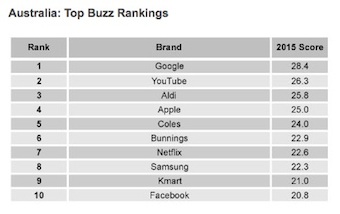
Google was Australia’s best perceived brand at the end of 2015, new figures from YouGov BrandIndex has found.

The study, by UK-based research company YouGov, includes over 250 brands and asks respondents: “If you’ve heard anything about the brand in the last two weeks, through advertising, news or word of mouth, was it positive or negative?”

Scores can range from 100 to -100 and are compiled by subtracting negative feedback from positive.

rankings

rankingsThe top 10 list is dominated by digital heavyweights, including YouTube and Apple. This shows that consumers are putting greater emphasis on socially shareable and digital adaptability.

Despite mixed publicity in 2015, German food store Aldi, came in third on the list, the highest non-digital brand featured. Supermarket giant Coles came in fifth, while major rival Woolworths didn’t make the list following a year of forgettable ad campaigns such as the ‘Fresh In Our Memories’ debacle that linked the company logo and tagline with war veterans as part of the 100 year memorial of the landing at Gallipoli.

The Australian findings are consistent with the global trend that sees digital based brands featuring among the best perceived. Although not featured in the Australian ranking, Amazon sits high among the best perceived brands on a global scale. Google, YouTube, Apple and Netflix, all featured in Australia’s top 10 list, are also ranked highly globally. Also among the high achievers is the world’s largest smartphone manufacturer, Samsung, appearing on 12 different countries top 10 lists. Popular social media website, Facebook sits just behind, appearing on 11.

YouGov’s BrandIndex is a daily measure of brand perception among the public. Every six months it consolidates its data and publishes rankings. These rankings are for Q4 2015. The firm’s Australian operation is a recent addition to BrandIndex, starting in the second half of 2015, and currently includes tracking of more than 250 brands.

Too late for Woolworths?

Too late for Woolworths?
With consistent competition from other major supermarkets, Woolworths has made big moves to reduce their prices, improve customer service and remain competitive. Phil Hine weighs up new systems and initiatives, but still wonders if it’s all too late.


Reviewing the fundamentals

Woolworths has historically been the dominant grocery retailer in Australia, but over recent years that position has been eroded by a resurgent Coles and the ongoing rise of Aldi. Not only has it had to re-look at its price positioning in the marketplace, but it’s had to reassess the general condition of their stores and trolleys, customer service, queue times and the availability of products.


Cost reduction

The cost of a basket of goods has been a major influencer in the grocery market, and with Woolworths’ $500 million investment in reducing grocery prices, it is definitely using this as a key message to entice consumers back to their stores. Deutsche retail analyst Michael Simotas said Woolworths had become “too expensive.” But with the recent reduction in prices, a family that does its weekly shop at Woolworths has reportedly gone from spending about $5 more than what it would have cost at Coles to paying about $1 less. This reduction in spending is something Woolworths is pushing, with signs outside each store that say a trolley-load of groceries that cost $246 at the start of the year now only costs $200.


Store improvements

The director of supermarkets Dave Chambers stated that he was “shocked” by what he saw in store when he first took on the role earlier this year. He is now investing A$65 million over the next 12 months upgrading its fleet of shopping trolleys, fixing rusty shelves and holes in floors, improving lighting and signage, and removing gates to make stores appear more welcoming.


Customer demands

Woolworths has introduced a new loyalty scheme which gives shoppers instant money off their groceries. The data collected from the loyalty program is helping understand what and where customers are buying products. There is talk that Chambers is considering replacing the current nine store formats with just four types of store – premium, mainstream, mainstream rural and budget – to better reflect demographic and geographic differences in shopping habits. Chambers stated that “We might see more value-oriented stores that have more space given to good products but in affluent communities more space given to best products.”

Changing the format of these stores will enable Woolworths to address the problem of availability and product choice, giving the consumers the right products every time they shop.


Service levels

Woolworths have recognised that service levels and shopper experience is something that needs to be addressed immediately, and the research they are conducting called ‘voice of the customer’ is able to give results within a day. This allows store managers to take swift action to remedy problems, which we see as particularly positive.


Will it work?

Woolworths has no other choice if it is to recover. It is in a position of its own making, and will need to fight its way out with an extended campaign of renewal.

Consumer perceptions take time to change, and as it has taken a sustained period of behaviour to create the problems, so will it take a sustained period of alternate behaviour to turn them around.

Sergio Ramos reveals why he is loving his life at Real Madrid

Sergio Ramos reveals why he is loving his life at Real Madrid

Sergio Ramos is loving life at Real Madrid, and says every day is challenge at Santiago Bernabéu.

The Spanish International moved to Real Madrid from from Sevilla in 2005, and spoke to FIFA’s official website about his early days at the club, and his responsibilities as a captain.

Sergio Ramos reveals why he is loving his life at Real Madrid

“I looked to the left and saw Zinedine Zidane, and to the right I saw Roberto Carlos. That was really something,” he recalled.

“I was a boy from Seville with lots of hopes, ambitions and desire to get to the very top. It took a few months before it sank in what being here meant. But I have very fond memories of all my teammates. They treated me really well and I adapted superbly.”

Having spend more than ten years at Real Madrid, Romos believes standard at the club keeps him motivated.
Sergio Ramos reveals why he is loving his life at Real Madrid
“I’ve spent 11 years at the best club in the world and every day is a test,” he acknowledged.

“It’s not easy to cope at a club like ours. That’s why I’m proud and motivated to keep working to keep improving. You can’t live in the past here.”

Ramos succeeded Iker Casillas with the armband when the goalkeeper left for Porto in the summer, and wants to set an example as skipper, citing his ‘idol,’ Fernando Hierro.
Sergio Ramos reveals why he is loving his life at Real Madrid
“I have a very good relationship with [some of Madrid’s former captains]. And they also give great advice,” he revealed.

“The captain should set the example in everything and offer support in every situation, he should be there for any problem a teammate might have.

“That means you always have to behave appropriately. You have to try to be above reproach, to be the first one to step forward and be a focal point for your teammates.”

In-house or outsource: getting the best value digital strategy


In-house or outsource: getting the best value digital strategyInvesting in digital is an important part of most businesses’ marketing, but are you better off hiring internally or outsourcing to an agency? Sina Kresse talks us through the decision.

sina kresse senior-digital-consultant-sina-kresse-yoke-2 180The term ‘digital strategy’ has not been around very long, but over its relatively short lifespan the concept has not only proven to be a game changer, but also a significant mind changer for businesses.

Business owners or managers understand that the digital space offers immense growth opportunities for those who are ready to embrace it. However, diving in head first without understanding where digital sits within a wider business strategy and whether it is best to implement it in-house or with the help of an external party, will more often than not result in unsuccessful endeavours in the digital realm.value-theme-badge

Digital marketing is a prime example of an area that has the potential to deliver great results for businesses, but often fails to do so due to flawed implementation that does not tie the various marketing tactics to business goals.

This common shortcoming can be witnessed in the operation of the flood of new online businesses that launch each day. These businesses are knowledgeable enough to be able to create an online store within a day using out-of-the-box design templates, technologies and plugins. But this is where the digital revolution often ends; there is rarely a robust plan in place or the required skillset to digitally market the new website, thus leaving the business undercooked and potential unrealised.

At this point there are two viable options for a business that has acknowledged the need for a digital roadmap past the website build; either hire an internal resource to manage the digital journey or engage an external agency.

Regardless of whether a business chooses to rely on their internal capabilities when setting sail for the digital horizons or whether they choose to engage an external partner, the lack of a fundamental business and marketing strategy to achieve the digital goals, and subsequently not being able to spot the real reasons behind the all-too-common failure, makes it all too easy to point the finger at others. Worse still, after failing, a business can lose faith in digital altogether, preferring to recede and stick to traditional methods only.

Why does the implementation of a digital strategy within an overall business strategy seem so complex? This can be attributed to two factors that come into play when the digital strategy is managed in-house or outsourced: environmental turbulences and the cost of coordination.

The Australian economy now consists of larger and more intricate business structures than ever before, with the speed of innovation and professional capabilities having increased radically in the past decade. Consequently, this rapid evolution has left a large group of businesses in the dust, with many in dire need of a more sophisticated strategy that would drive a much-needed reform in their often rigid organisational structures and give more visibility to internal digital capabilities.

This is problematic, as these businesses have a core set of traditional, non-digital strategic competences that have allowed them to reach the current point of their business cycle. However, in order to utilise the digital space to maintain, enhance or even skyrocket the present state of the business, business owners would need to ensure they uncover any undiscovered digital competences and determine how to gain access to those.

It is not just about uncovering internal digital competence; digital capabilities in the wider digital space are constantly evolving, which poses its own challenges for the digitally eager businesses. For instance, the vast sea of digital tools, digital marketing techniques and elaborate digital strategies are in a constant state of flux, not to mention the ongoing policy changes among the influential big players, such as Google, Facebook and governmental regulatory bodies.

All of these factors add further hurdles for a business to jump through on their digital journey and navigating through these may prove to be overwhelming if the internal digital know-how is not there. Even business owners who are ready to spend time to tackle these topics will realise that learning and keeping up with the latest in digital consumes a significant amount of time, which often leads them to look for outside help.

Where businesses may struggle internally with keeping up with the continuous changes in the digital industry, in the digital agency services industry this is not the major problem. Rather, the dominant issue lies in transforming a digital strategy into an actionable plan and consequently executing it seamlessly for the client business.

Businesses have always been outsourcing, collaborating and even acquiring in all business areas to secure a comprehensive pool of resources required for profitable business operations. Ideally, the outsourced agency should act as a strategic partner that understands the business and its unique needs, but due to the digital environment currently going through its ‘wild west’ period, businesses get burnt, regrettably often when the expectations of the business and the deliverables of the agency misalign.

For example, just by looking at the current agency landscape it is possible to see various creative set-ups; agencies working with other agencies, white label reseller programs, freelancers hired on demand and so forth. Add to this the amount of ‘churn and burn’ digital marketing packages that promise fantastic results for little investment, finding the perfect agency turns into a game of Minesweeper.

Furthermore, transaction costs become an issue, especially when dealing with multiple agencies. The coordination needs increase when liaising with partners from outside the business, which can often lead to frustrated business owners and marketing managers. Still, this does not mean that there are no reputable agencies out there or that the risks of partnering with an incompetent agency would outweigh the benefits of finding the perfect match.

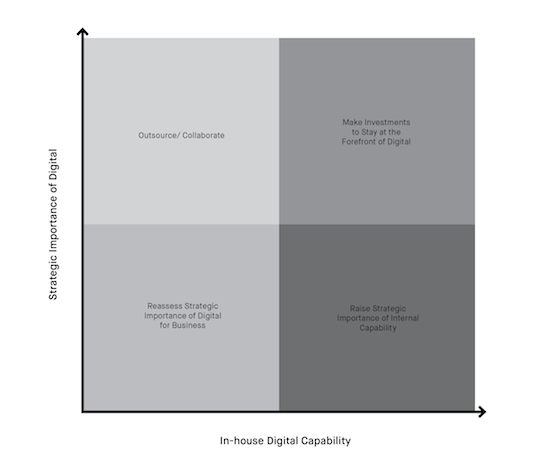
The quadrant graph below shows one way of determining whether to keep operations in-house or whether to outsource, with each solution having their advantages and disadvantages.

sina kresse decision-matrix-for-digital-strategy-implementation-yoke 540sina kresse decision-matrix-for-digital-strategy-implementation-yoke 540

Established agencies with strong digital capabilities benefit from economies of scale and they are not only familiar with the various strategies in digital, having executed strategies for a multitude of businesses, but they also understand what strategies work in what industries. This means that a business does not need to reinvent the wheel if they want to invest in digital, and that they can rely on the agency’s existing competences.
Nevertheless, prior to being able to determine whether insourcing, outsourcing or a hybrid model is appropriate for a business, a thought-out strategy should be devised that answers the following three questions:

Is digital a part of my key success factors?
Do I create a unique selling proposition through digital?
Do I use digital as a prime marketing channel?
If the business plan includes digital services as a core component, it should always be backed up with proper investment. Merely sending the marketing manager to a one-day workshop or hiring a low-budget agency on a cheap retainer is not enough to master the digital space and provide return on investment.

Regardless of the path chosen, the key to success is the internal buy-in in the business. This requires a solid understanding of the opportunities that digital can provide to a business, making an informed strategic decision on the best way forward and avoiding any half-hearted digital implementations.


Sina Kresse is a senior digital consultant at Yoke.

Real Madrid midfielder: Zidane gives freedom

Real Madrid midfielder: Zidane gives freedom

Real Madrid midfielder Isco says players have more freedom under Zinedine Zidane, and believes Los Blancos can win Champions League this season.

“Since he arrived he has given me the freedom to play, to do what I know on the pitch and to take defensive responsibility, which is important for balance,” AS reports.

Real Madrid midfielder: Zidane gives freedom

“And in the first year under Carlo Ancelotti when he was the assistant he gave me good advice. He told me he had trust in me and he has told me that now.

“I remember Zidane’s control as a player, his dribbles, his volley to win La Novena [the ninth European Cup]. I remember he had a lot of elegance and was very classy.

“He was one of the greatest players in history and it was impossible not to notice him.
Real Madrid midfielder: Zidane gives freedom
“Happy? I’m always happy. I’m at Real Madrid and it’s difficult to play all the matches. I worked hard under Benitez and more under Zidane.

“I’m playing more now, sometimes other teammates play, and it’s important everyone is prepared. We have two competitions that are very long and we have to be 100%.

“This is a very similar squad to the one that won La Decima. There haven’t been many changes. But we have a very broad, strong and competitive squad, and now we have to work hard to bring home the Champions League.
Real Madrid midfielder: Zidane gives freedom
“It’s the most important club competition. Everyone dreams of being able to play in it. I’m very happy to have been involved in it almost every year of my career and I’ve been fortunate to win it.

“Roma are a very difficult opponent. They have great players but we have to focus on our game, our idea of football and see what happens from there.

“We know they will be very motivated on their ground. It will be a difficult tie which we hope will be settled in our favour.

When digital marketing goes sour are clients or agencies at fault?


When digital marketing goes sour are clients or agencies at fault?
Salli Jokinen asks: when digital marketing all goes wrong, is it the agency’s fault, or is the client to blame for not understanding what is actually involved to achieve success?

Digital marketing as a holistic discipline is not understood well by many; neither client or agency-side. Business owners and marketers working client-side often still feel insecure when it comes to all things digital, either dismissing the space altogether or alternatively turning to agencies for single-discipline, narrowly-focused digital projects that should ideally form only one section of a more comprehensive digital marketing strategy.

Agencies, in turn, quite frequently fail at managing their clients’ expectations of what is realistically achievable with the agency’s specific internal capabilities. Particularly, specialist agencies do not always demonstrate a broad understanding of the holistic digital marketing landscape and how the various disciplines of digital marketing, as well as digital design and digital branding, work together to deliver real results for their clients.

When agencies deliver only in one specialist area, the coordination of the different digital areas and/or several specialist agencies is left up to the client. In this situation, the client has to be fluent in digital themselves in order to see any digital marketing success, but unfortunately, this is often not the case.

Real-life examples of the siloed digital approach are not difficult to come by; there are several beautiful websites produced each month that show no consideration for conversion optimisation, search engine optimisation or even user experience. This means that these sort of websites have a decreased chance of generating new business, being shown in search results or engaging the target audience.

Worse still, very often, new websites do not have any continuous digital marketing budget allocated for promoting them (and the businesses), which leaves this significant investment sitting in the digital space with next to no visitors or business return.

It is these types of cardinal mistakes that demonstrate how the digital space is a difficult place for both clients and agencies to achieve success together. When the website does not perform, is it the agency’s fault? Or is the client to blame for not understanding what is actually involved to achieve success?

Without playing the blame game, it is safe to say that there is fault both on the agency-side as well as on the client-side. In general, there seem to be discrepancies between what many agencies can deliver, the clients’ expectations of digital marketing, and what a holistic digital marketing approach can actually achieve for a business if executed well.

Agencies contribute to the discrepancy by lacking the necessary holistic digital marketing capabilities; they look at the digital landscape through their own specialist lens and subsequently engage in a siloed approach. They also do not communicate their focus to the client well enough and often fail to educate their clients adequately on where their specific offering fits into the overall marketing funnel.

On the other side of the coin, clients are frequently not informed enough of the digital space and the interactions between intricate networks of moving digital parts. For example, many clients still seem to subscribe to the thinking “if you build it, they will come”, not recognising the differences between the digital space and the physical world.

To make the relationship work for both clients and agencies, agencies need to start educating their clients on how the specific work they conduct is helping the clients achieve their business and marketing goals. Specifically, it is a good idea to inform the client where the agency’s solution sits within the digital marketing landscape and as part of a marketing funnel.

Clients on the other hand need to start learning about the digital landscape proactively and possess at least a basic understanding of the wider digital landscape before jumping on the digital bandwagon.

Whether the decision is to engage an external agency, to develop an internal digital capability or to go with a hybrid of these, it is nearly impossible to experience real success without understanding the landscape first and how the different digital areas fit together.

Quick client checklist for digital marketing success:

   1.gain an understanding of digital marketing and know how all the different digital components             contribute to the marketing funnel – there are plenty of online and offline training courses,                   authoritative digital marketing resources and digital consultants available,
   2.whether going with an agency or hiring an in-house expert, ask them what past successes they             have had with digital marketing for their clients or employers and which specific KPIs were                 achieved,
   3.ask the agency or the in-house candidate how they would achieve your specific business and                marketing goals – let them explain where their digital capabilities sit within the marketing funnel        and how these would contribute towards your goals,
    4. ask the agency or the in-house candidate what metrics they report on in their digital marketing              reports and how do they tie them back to the specific business and marketing goals, and
    5.evaluate their web presence – if they cannot conduct digital marketing for themselves, odds are           they cannot do it for anyone else either.


Why Alvaro Arbeloa admitted that he is still struggling under Zidane?

Why Alvaro Arbeloa admitted that he is still struggling under Zidane?
Real Madrid defender Alvaro Arbeloa admitted that he is as yet attempting to settle that Zinedine Zidane is his administrator at the Bernabeu. Zidane assumed control from Rafa Benitez in January and his side has scored an amazing 23 goals amid his six matches in all rivalries so far – staying unbeaten.
Alvaro Arbeloa admitted that he is still struggling under Zidane

In any case, Alvaro Arbeloa admitted that he is still left awed by the Frenchman – who was his golden calf when he was growing up. “When I take a gander at him now and again I am left surprised in light of the fact that he’s an extraordinary player and I need to let myself know that now it’s ordinary.” he told Real Madrid’s official site.
sr4 18022016 - Why Alvaro Arbeloa admitted that he is still struggling under Zidane
“He’s my mentor and I assume that is certain. I feel advantaged to be playing here, in the best club on the planet, and in a city such as Madrid. I feel at home here. Zidane was my deity when I was a child. A couple of years prior, he was a partner and now he’s my mentor. He prepares close by us and we need to gain from him.” Arbeloa included: “He’s the ideal mentor for Real Madrid.”
sr4 18022016 - Why Alvaro Arbeloa admitted that he is still struggling under Zidane.45
The Spanish right-back re-joined Los Blancos from Liverpool in July 2009 subsequent to abandoning them for Deportivo in 2006. He has gone ahead to show up for the Spanish mammoths in all rivalries yet has thought that it was hard to procure a starting part for Madrid this season, falling behind Danilo and Dani Carvajal in the privilege back packing request. In the interim, Zidane has an intense employment staring him in the face to convey prompt accomplishment to the Bernabeu this battle. Madrid is presently one point behind adversaries Atletico Madrid in the league whilst they are seven points behind their Arch-rivals Barcelona.

Why Cristiano Ronaldo wants Bale back at Real Madrid?

Why Cristiano Ronaldo wants Bale back at Real Madrid?

The Real Madrid star claims the relationship he has with his kindred approaches is not critical, but rather one thing is sure as Ronaldo wants Bale fit and terminating in the chase for trophies. Cristiano Ronaldo was on edge. The Portuguese star told the media Tuesday that Real Madrid’s forwards don’t should be companions like the Barcelona trio of Lionel Messi, Neymar, and Luis Suarez.
Cristiano Ronaldo wants Bale back at Real Madrid
What he needs, notwithstanding, Ronaldo wants Bale fit and in form toward the end of this season. Bale, Benzema, and Ronaldo are all top proficient players, regardless, and when the three consolidated viable, their BBC trident can likewise be to a great degree noteworthy – as it was when Real Madrid won the Champions League in 2013-14.sr4 18022016 - Why Cristiano Ronaldo wants Bale back at Real Madrid
The issue right now, in any case, is the nonappearance of Bale through injury. Scoring in that last against Atletico in Lisbon remains the Welshman’s finest hour in a Madrid shirt and despite the fact that his exhibitions have been empowering in the present battle, he has at the end of the day spent unreasonably long on the sidelines. Following moving to Madrid in the mid-year of 2013, Bale has endured eight separate muscle injuries and has highlighted in just 109 of a conceivable 150 amusements in that period, playing only 63 percent of the aggregate minutes in those installations.sr4 18022016 - Why Cristiano Ronaldo wants Bale back at Real Madrid.25
Measurably, the previous Tottenham man’s 13 goals in 17 appearances this season is effortlessly his best spell subsequent to moving to Spain and his vicinity in the club makes Madrid’s attack a great deal more dynamic too. His pace and capacity to break with rate extends resistances and gives Ronaldo spaces to abuse in the inside. With Bale in the side, Cristiano is a superior player. On the off chance that they are to have a possibility of winning the Champions League this season, is exactly what Madrid needs — alongside Bale’s goals in the last part of the season. So Ronaldo is correct: Friendship is not as a matter, of course, the most critical thing. However, winning titles together can just help that as well.

McDonald’s modern marketing menu – CMO interview


McDonald’s modern marketing menu – CMO interview
The CMO of McDonald’s talks us through the brand’s current state of play and how its products and communications are evolving to meet changes in customer needs. By Susi Banks.

The Digital Outdoor IssueWith a giant lunchbox to launch its steak products, McDonald’s Australia not only tapped into the zeitgeist of experiential marketing, but also made it into the Guinness World Records.

The Digital Outdoor IssueIt was a campaign aimed at taking the ‘boring’ out of lunchtime, and McDonald’s Australia CMO Mark Lollback [Editor’s note: the interview for this feature was conducted in November 2015, shortly before Lollback left the company to become CEO of GroupM] says he’s passionate about having fun, being disruptive and really getting out with the people.

“The agency said, ‘Well, the whole campaign’s about lunch, so why don’t we build the biggest lunchbox?’ So we built a big lunchbox and parked it down near the Opera House, where it sat for two days,” says Lollback.

“People wondered what it was about, then it opened as a restaurant and we gave away free sampling tasters of the steak wrap.”

It was so successful in Sydney, he adds, that they packed it up and moved it around the country.

“Consumers loved it and it was a great way to get a trial going, and in a very disruptive way,” he says.

“Everybody was taking photos and putting them on Instagram and generating a lot of awareness for us.”

Mcdonalds Maccas lunchboxMcdonalds Maccas lunchbox

Australia was the first country in the world in which the fast food giant launched steak, just as it had with salads.

“Why? Because we have fantastic beef here and people love it,” he says.

“Although McDonald’s Australia is always trying to be innovative, there is no doubt that we watch what other McDonald’s countries are doing and if it’s something interesting we’ll see if it’s right for here.”


Current consumer challenges

Asked about some of the company’s current marketing challenges, Lollback says all brands have consumer tensions and consumer challenges. McDonald’s has identified a few of those that it focuses on as a business.

“We know that our customers want to feel valued,” he says.

“We know that our customers want to feel good about the food that they eat and we know that they want McDonald’s to keep up with the times.”

“What we want to do is make sure we remain very focused on how best to serve our customers, and how best to keep remaining relevant as a brand in a very competitive environment, which is food.”

With the majority of McDonald’s Australian stores being open 24 hours, seven days a week, Lollback says the company is, in essence, about trying to help people solve problems.

It may be a coffee before work, thinking about the day ahead or a taxi driver driving in the middle of the day or night who wants a snack and to use the bathroom.

“In mobile in particular and in gaming, we’ve had great success,” Lollback says.

“We’re a fun brand at the end of the day and people want brands to act in a fun way and make life fun, right through to advertising on mobile phones and generally trying to connect.”


Maccas – world leader or follower?

Lollback says that although McDonald’s is a large brand internationally, each country operates autonomously.

“We don’t get mandates from the US, or the global team. We don’t get told ‘you must do this, you must do that.’ Our management team is all-Australian… I heard recently that there have only ever been two expats,” he says.

Mcdonalds maccas create your taste advertising“The strategy we’re pursuing here is right for McDonald’s Australia, where our customers are, where our food trends are and where our competition is.

“We have been on a 40-plus-year journey of being part of the Australian fabric and community, and we’re really passionate about serving that community, so I wouldn’t say we ‘lead the world’ for McDonald’s, I just think we’re independent and we do what’s right for us.”

For example, McDonald’s in the US was the first market to test the all-day breakfast, and that will shortly be introduced in Australia.

“We looked at the US results, and said, ‘Well, Australians have been asking for all-day breakfasts for many years, so we thought we’d test that.

We tested that and it was a great success and we will roll it out. That’s a great example of, ‘Why didn’t we think of that?’”

On the other hand, Australia is the lead market for the rollout of ‘Create Your Taste’.

“McDonald’s companies around the world are always looking at what’s happening in other markets, and I’m sure some countries will pick it up and roll it out,” he says.

Mcdonalds maccas create your taste advertising

McCafé was also invented here in Australia.

“Really good coffee means a proper cappuccino or a latté, a proper barista-made coffee.

“You can get a barista-made coffee in drive-through. That’s another Australian innovation. We’re the first country in the world to do that.”


The modern media menu

Asked about the best media mix for McDonald’s, Lollback says the company in Australia is a large media buyer, as well as a large user of different media channels.

“I would say our media mix is changing, but it’s not extreme. At the end of the day we’re a large brand that has multiple parts, trying to serve our customers seven days a week with multiple messages and multiple demographics. And with each one of those, there are many different ways to get there.”

“We absolutely still use TV and see television as a really important part of our portfolio. We definitely use outdoor, we use radio, we use mobile, we are very much on social media.”

“Money moves around – I don’t think anybody would be surprised to see more money be directed into digital – but it’s not an avalanche,” he says.

McDonald’s has always been a big user of outdoor, says the CMO, but he predicts that once the medium goes more digital, we will start to see some really clever pieces of advertising, including weather-related, date-related and topical news-related activity, the surface of which has only been scratched so far.

“Outdoor will evolve, but it will depend on location. It only makes sense if there is proximity. I think we’ll see some really interesting things happen. In terms of interactivity, mega sites like Trafalgar Square in London are already starting to be utilised very creatively.”

“Most of our customers are driving around in their cars or they’re catching buses and trains and that’s where they see our out-of-home advertising, so outdoor for us is great. It is one of those mechanisms that is very location-based. We buy a lot of outdoor that is based around our locations. We buy a lot of directional signage.”

“Australians also love going on holidays in their cars and we’re a very big part of Australia’s culture and fabric, and we tend to use outdoor, so it will be seen on those road trips. Drive up and down the coast and you’ll find that.”

Lollback says although digital is already here, it’s still quite erratic.

“Digital is going to open up a lot of flexibility around out-of-home,” he says.

“We’re exploring, we’re experimenting, but to be able to do it en masse, on road signs and the like, it’s still got a long way to go.”

Asked how traditional media like outdoor can become more integrated through interactivity with mobile phones, Lollback points to examples such as offering instant rewards via static sites such as Times Square in New York City. Connecting with the board through a mobile device, people could take a selfie and end up as part of the billboard.This type of activation taps into people’s desire to see their name up in lights.

Another example, from Stockholm, allowed viewers to play a Pong-like game on a digital billboard using their smartphone as a controller. Things like this keep the brand fun, Lollback says, engaging with people who think, ‘This is a fun brand, this is a brand that understands me’.

“There was a very creative piece of McDonald’s outdoor that one of our agencies did in Europe. There was a poster- size case with approximately 40 empty McFlurry cups, and when the temperature hit 35 degrees the door would open, and you could take a cup and go to the restaurant and get a free McFlurry. There were people standing around gunning for the temperature to get up to 35 degrees.”

Mcdonalds Netherlands free mcflurry ad



Mcdonalds Netherlands free mcflurry adLooking ahead

Having been the market leader for a considerable amount of time in its category, McDonald’s doesn’t get too distracted or too focused on its competitors, says Lollback.

“I think we’ve found that the best thing we can do is grow. The more we lead, the more we continue to innovate, the more our customers reward us.”

“There’s no doubt today that customers want more choice than ever,” he says.

“Their demands are higher than ever, rightly, and I think it’s up to us as a leading brand to continue to lead the category.

“I’ve always been of the view that market leaders should never act as a leader, but always as a challenger to keep the category and the industry in growth and keep people excited about it.

“We are not complacent about it, but I think there is a responsibility to lead as well, for our customers and also for the category.”

McDonald’s Australia’s current media agency roster is large and varied, and includes both DDB and Leo Burnett as creative agencies, OMD as media agency, Mango as PR agency and Y&R Group’s Digital Agency, which was appointed earlier this year.

Lollback, who has been with McDonald’s for four years, says he feels really proud for his team and agency partners when they win awards, of which there have been many.

He says he heard a great line that McDonald’s was ‘born in the USA’ but ‘grew up in Australia’.

He says the company likes to think that, “We’re about as Australian as you’re going to get – at being an American company.”

Really?? Cristiano Ronaldo earned £860,000 for a single photo shoot?

Really?? Cristiano Ronaldo earned £860,000 for a single photo shoot?

He’s the most handsomely paid player on the planet – gaining £288,000-per-week yet it’s been uncovered that Cristiano Ronaldo earned practically £1 million for a solitary photoshoot, enduring only a couple of hours. Football Leaks – the now scandalous whistleblowing association – has discharged an agreement which includes Ronaldo’s picture rights organization doing an arrangement with Saudi Arabian telecoms mammoth Mobily.
Cristiano Ronaldo earned £860,000 for a single photo shoot

The break demonstrates that the Portuguese star Cristiano Ronaldo earned an eye-watering £860,000 for marking five Portugal shirts, two online networking posts and a photograph shoot – which had a most extreme time point of confinement of four and a half hours.sr4 19022016 - Cristiano Ronaldo earned £860,000 for a single photo shoot.54
How about we simply consider this for a moment. Nearly £1 million for marking five football shirts. Getting your PR group to post two posts on your Twitter and Facebook and standing and grinning for a photograph shoot. Unbelievable. It’s been worked out that regardless of the possibility that the day kept going the greatest four and a half hours – which appears to be to a great degree improbable – Ronaldo would procure over £3,000 every moment. Three thousand pounds at regular intervals. Amazing.sr4 19022016 - Cristiano Ronaldo earned £860,000 for a single photo shoot
Cristiano Ronaldo has now scored 33 goals in 31 matches in all rivalries taking after his strike against Roma on Wednesday night amid a 2-0 triumph for Los Blancos. The great completion was his twelfth goal in only seven Champions League coordinates this battle, five goals in front of his closest challenger – Robert Lewandowski. The European rivalry is Madrid’s just reasonable possibility of winning a trophy this season taking after Barcelona’s La Liga triumph over Sporting Gijon on Wednesday. Zinedine Zidane’s men are one point behind adversaries Atletico Madrid yet trails the Catalan club by a gigantic seven points with only 14 matches remaining. They were likewise kicked-out of the Copa del Rey after the previous administrator Rafa Benitez handling Denis Cheryshev, who was ineligible.

What is Cristiano Ronaldo’s biggest problem?

What is Cristiano Ronaldo’s biggest problem?

Former Real Madrid manager Rafael Benitez believes Cristiano Ronaldo’s biggest problem is Barcelona, as his stunning goal scoring efforts goes in vain with Real main rivals winning more trophies.

During Real Madrid’s Champions League clash with Roma, Benitez  appeared on the BT Sport, and lift the lid over his seven month tenure at the Spanish Capital, and revealed how it is like working at Real Madrid.
What is Cristiano Ronaldo’s biggest problem?

“The question is that Barcelona is there winning and that is difficult to manage for Real Madrid so they have to keep winning and if you do well still Barcelona could still be doing well,” he said per Tom Farmery of the MailOnline. “That is a big problem for Real Madrid.”

“Obviously as someone who has come from the Academy of Real Madrid, I was really proud to be there every time that I was,” he said, the Daily Mirror reports.What is Cristiano Ronaldo's biggest problem?
“It’s a pity because we qualified [for the knockout stages of the Champions League] without losing any games and scoring a lot of goals.

“We were really pleased with the team and it’s a pity that we’re not there.

“It’s difficult to explain. You need to know exactly what happened in Real Madrid in the last years.

“You could see [Jose Antonio] Camacho, [Vicente] Del Bosque, [Manuel] Pellegrini, [Jose] Mourinho, [Carlo] Ancelotti…it’s not easy to be there manager there.What is Cristiano Ronaldo's biggest problem?
“You have to do everything perfect. As soon as something is wrong or the chairman thinks that it’s wrong then you’re used to having problems. I think that we were quite good, as I said before.

“I think that we could do really well but they were a little bit nervous and the fans were a little bit nervous and the chairman was a little bit nervous then they change the manager.”

Benitez reveals why Real Madrid need to challenge the supremacy of Barcelona

Benitez reveals why Real Madrid need to challenge the supremacy of Barcelona

Rafa Benitez says Real Madrid need consistency, if they want to compete with their arch-rivals Barcelona.

The former Real Madrid manager admitted Los Blancos job is the most difficult in the World, with Perez involvement in every club matter.
Benitez reveals why Real Madrid need to challenge the supremacy of Barcelona
“[Pecchia said] there is a permanent presence of [Perez]. He’s around, he’s talking with players, he’s talking with the Press,” Benitez agreed, the Daily Mirror reports, in an appearance on BT Sport.

“He’s always around, it’s not easy for a manager, especially coming from England, to see the chairman talking with players or talking with the press every single day.

“When you talk about consistency it is the key word because to win the League you have to be consistent.Benitez reveals what Real Madrid need to challenge the supremacy of Barcelona
“You have to fight against Barcelona and Barcelona has a style of football, a model of football and then Real Madrid is changing managers every year so you have to start again.

“That is the reason why Real Madrid has won one League title in the last seven, Atletico Madrid one and Barcelona five. Barcelona now has been in six Cup finals in the last eight years.

“They’ve won more than double the trophies of Real Madrid in the time that the chairman is there, so I think it is because they are consistent and that is the key to win the League title.”

“He did a great job in terms of business. Real Madrid needed to improve the business part of the club and he did really well,” Benitez noted.Benitez reveals what Real Madrid need to challenge the supremacy of Barcelona
“In football the problem is that Barcelona is still winning and winning, so he’s changing because he’s trying to find solutions but still Barcelona is winning more every year. That is the big problem for Real Madrid now.

“I’m frustrated a little bit because I was sacked. As someone who for 20 years worked at Real Madrid as a player and a coach to go there and see the players who you could see were really competitive, good professionals.

“To see that you couldn’t control things in the way that you would like to do it and then improve the team as a team is a little bit frustrating, yes.”

Spotify launches its biggest marketing campaign yet


Spotify launches its biggest marketing campaign yet
Music streaming service Spotify has launched its Australian ‘Summer is better with music’ campaign, its largest since entering the market in 2012.

It has been driven by a data-led approach, utilising a wealth of first party data to understand what’s driving platform engagement during three key music enjoyment moments – fitness, travel and commuting, and partying.

The mobile-first campaign, planned and bought by media agency Foundation is running nationally across digital, social and outdoor until the end of February.

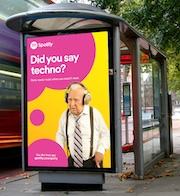
Party_Metrolite_in situ 180Party_Metrolite_in situ 180Outdoor creative for the campaign will again contain bright, eye-catching content in strategically chosen locations in five capital cities, after the success of Spotify’s first foray into out-of-home advertising in 2014, which won OMA’s Creation Collection Award for ‘Best Creative Execution.’

On social media, Snapchat will play a key role in driving organic conversion and user generated content around party, commute and fitness.

Spotify has enlisted the assistance of New Zealand startup Mish Guru, for access to their Snapchat content management platform, which has helped grow ‘SpotifyAU’ to over 4000 followers in just over a month.

The campaign’s digital, social and mobile spend is complemented by a programmatic buy, which utilises Google Display Network affinity segment targeting, as well as leveraging mobile location and behavioural data to create context-relevant geo-targeted ads.

Ad content is curated by in-house music editors, artists and influencers.

“By leveraging the expertise of artists, influencers and our own in-house music editors, this personalised, context-relevant campaign drives directly to content, as well as new product features such as Running and Party, which we hope will drive significant increases in acquisition, active use, and all-important brand love over the summer” says Serena Leith, marketing director APAC.

Since launching in Australia in May 2012, Spotify has become the leading streaming service for the region, and has been tried by one in three Australians.

Brands on the street: how outdoor advertising works for the luxury market


Brands on the street: how outdoor advertising works for the luxury marketSimon Bell explores why outdoor media is an important part of a luxury brand’s media strategy.

Simon Bell Landor headshotThe luxury market is currently waking up to the opportunities of ‘digital’. Conventional thinking was that the online and luxury experience were incompatible, but with the likes of Net-a-Porter engaging with millions of consumers every day across its online site, app and social media channels, this thinking has been widely debunked.The Digital Outdoor Issue

A 2014 report by McKinsey, ‘Luxury Shopping in the Digital Age’, concluded that while ecommerce represented just 4% of luxury sales, 40% of luxury purchases were in some way influenced by consumers’ digital experience, whether that be online or through social media.

The Digital Outdoor IssueDon’t let the tail wag the dog

Given these findings, it would be very easy for luxury brands to over index in favour of online marketing at the expense of outdoor, especially when competing for the attention of tech-savvy millennials. This, however, would be a mistake.

Luxury brands sell aspirations and dreams, not just products; therefore, crafting and telling compelling stories is crucial. And outdoor advertising plays an important part of the journey for luxury brands.

All brands should be media neutral, but this particularly applies to luxury brands, with the brand and brand story needing to drive media. Consequently, on and offline have their place in the luxury ecosystem. The key is to make the experience seamless. Luxury brands need to be set up to work across all touch points. They must be agile and provide brand owners with the tools to react quickly and efficiently to opportunity both on and offline.

Online, offline, inline

‘Old’ media still has a place. Burberry and Net-a-Porter are examples of luxury brands that understand how to engage consumers across all media.

Burberry has recently commissioned the incredibly popular fashion and portrait photographer Mario Testino to shoot its Spring 2016 advertising campaign.

To support the campaign, the brand will show behind the scenes footage using Snapchat, with the aim being to use digital and social platforms to convey the energy of the brand and the creative process. This is a perfect example of how digital and traditional media can support each other to generate new content.

Last year Net-a-Porter launched a digital outdoor campaign that displayed real-time sales trends across digital signage. A live feed was incorporated into an advertising board, showing the products women were buying globally, as and when they were purchasing them.

Using data to create a live trends update for its users was a simple yet innovative way to use outdoor advertising: creating a sense of urgency and a direct call to action.

Big statements

Another advantage of outdoor advertising is that it offers scale and the option of making big statements. Hermès, for example, is highly adept at creating adverts that are like pieces of art. Large hoardings become canvases that heighten the appeal of both brand and product, especially where the brand’s scarves are concerned.

The same applies to talent. When a luxury brand is paying millions of dollars to a celebrity deemed to be a good fit for the brand, it stands to reason that there is value in larger scale outdoor activity that brings brand and celebrity together. Think of the Calvin Klein billboards in Times Square, New York, which can even generate media and social interest well beyond the billboard itself.

London, New York, Paris

Luxury fashion brands have long associated themselves with places, with glamorous destinations always playing a part in campaigns and photo shoots.

These destinations now provide the location for luxury shopping experiences that play the role of brand-cathedrals, where the rich and style savvy can worship and experience the brand. Retail destinations like Paris, New York, Dubai, Hong Kong and London provide a natural backdrop for luxury brands.

Take, for example, Tiffany & Co and its activity in Hong Kong. The brand regularly takes over the tram stop outside of its store to advertise the brand, bringing the brand out into the street.

There are two ways to look at this execution.

One is to view this activity as unnecessary ‘brand badging’ that needlessly damages the elegance of the brand. The counterview, however, is that in a city like Hong Kong, which is naturally chaotic, vibrant and visually cluttered, bringing the brand to the streets is appropriate. Outdoor is a means for the brand to become part of the fabric of the city.

Gateway to the luxury market

The location of outdoor advertising also plays an important role when it comes to large-scale outdoor advertising at international airports.

Airports are a proven gateway to the luxury market, with regular international travellers more likely to purchase luxury goods on a more regular basis, whether it be fashion, cars, watches, or business and first class airline tickets.

Outdoor large-scale advertisements with luxury branded content and images can attract consumers’ attention and help that brand stay top of mind. They can create a brand story right when consumers are looking for inspiration before purchasing luxury goods at duty-free retailers or at their end destination.

Personalising your message

Outdoor advertising is traditionally a mass medium, but luxury consumers more than ever are demanding personalised service from their brands and this extends to how they are communicated to.

Luxury car brands were some of the first to embrace outdoor advertising, but with the advance of digital they have been able to advance their messaging. This year, Lexus exclusively teamed up with APN Outdoor to launch a series of digital billboards with vehicle recognition technology to tailor messages to drivers of non-Lexus cars. The tongue-in-cheek campaign appeals to a younger and more progressive luxury audience.

Part of the network

Outdoor definitely has an important part to play in the luxury brands market and when it comes to reaching affluent consumers. Outdoor advertising can inspire, create desire and tell a brand story. But the brand journey cannot start and end with just outdoor, as brands need to ensure consumers can act on inspiration right then and there, however they please.